|
|
What is the focus of your investigation? The
focus of my investigation is to look at ways to make the Year 8 scheme
of work on tourism more suited to the different learning styles of
pupils in the group. This was not though how it started off! I started with the rather over ambitious study question: 'How can I use different teaching styles to enagage pupils with different learning styles?' Naively on the 10th May 2005, I came up with this brainstorm...... Abstract I
am for the most, a didactic teacher, too scared to 'think outside the
box!', I am a bit of a 'control freak' and have an 'I am in charge!'
attitude and I like order in the classroom. I
taught an observed lesson this year as part of department review and
tried something different called 'Jig-sawing.' I received very positive
feedback which made me think that I ought to try something more risky
more often. Consider the background There
are lots of different learning styles that suit different people. There
are lots of different views and research on learning and how it can be
achieved. There has already been a lot of research on Multiple
Intelligences - Gardner and also on Accelerated Learning - Colin Rose
and Brian Tracy, would I need to look at both of these? Where did
Bloom's taxonomy fit into this? Does it in fact fit into this at all? I
needed to think about how lessons can be adapted to incorporate those
learning styles. I also needed to think about the limitations and
implications of trying this out on 'real' classes. Think through the methodology In
order for this to work did I? Choose one group? Choose parallel groups?
Choose groups of differing abilities? I would need to devise a
questionnaire for pupils, based loosely on a simplified version of
Gardner's research and then sort the results: boy / girl, ability,
ages? Following this I would then need to plan a series of lessons
incorporating the different styles and include these in an appendix. My
lessons would need evaluating. How would this be done? By pupils?
Through being observed teaching and by myself? Perhaps I should be
brave and use video? Questions
were also raised, would I need to observe other lessons from other
subjects where a different learning style might be dominant, e.g.
Drama, Art, Technology etc. to see how these subject catered for the
need of pupils? Understand the analysis Is
a pattern evident from the questionnaire results? Does age, gender,
ability, peer pressure, home background have an influence? If so why?
If not why not? Suggest some outcomes For
example, I would predict that boys would prefer Kinaesthetic lessons,
girls would prefer Linguistic lessons. More able pupils would have high
levels of Inter and Intra personal intelligences etc. It
wasn't until after I started to look at this Action Research Cycle,
that I realised this question could earn me about six PhDs and I needed
to focus my question more carefully, otherwise I would still be writing
up my research well into my 90's! So I started to think of a group and
a topic. Therefore, I will concentrate on my Year 8 Geography group and the unit on Tourism.
The Action Research Spidergam
This spider diagram reflects my intial thoughts on my project, that is
once I had narrowed it down to include only my Year 8 group and only
one scheme of work, Tourism. Although it is only early days, I already
have a lot of thoughts and ideas running through my head - at the
moment, the possibilities are endless!!
|
|

This just about sums it up!
|
|
|

What type of learner am I?
|
What was your approach and/or what evidence have you gathered? As
a part time teacher, my choice of groups was somewhat limited! My
specialism is Geography, but due to timetabling constraints I actually
only teach two Geography classes, the rest of my timetable being made
up of maths, photography and a college course - not bad for two days!
So, in the end I had a choice of working with my Year 7 mixed ability
group or my Year 8 top set. In the end the choice was easy. I decided
to focus my research on my Year 8 group as it is this group that I have
found the most exciting to teach. They are a group of 33 lively,
intelligent and confident individuals whom I knew would respond to this
in a mature and enthusiastic way. I
thought the best way to tackle this with the pupils was to be honest
with them and tell them from the start they were going to be my 'guinea
pigs' and that I was going to trial something new with them. Their
response was superb! They seemed genuinely interested in what I was
hoping to achieve and asked lots of pertinent questions such as what
was in it for me, why did I want to do, why did I choose them etc.. I
thought this was extremely selfless and thoughtful of them, they seemed
to be putting my needs in front of their own! My first suprise from
this project - let's hope there are many more! After
my introduction, I went on to explain how I would approach the research
with them. I started off giving them the title of my project, , 'How can I teach the unit on Tourism to my top set Year 8 class to meet the different learning styles of pupils in that group?' I
then asked the pupils what information they thought I needed to gather?
They suggested I needed first to find out what their preferred learning
styles were. A good starting point I thought and in good 'Blue Peter'
tradition, I produced a questionnaire that I had prepared earlier! The
questionnaire was adapted from one I found online at: www.nedprod.com/Niall_stuff/intelligence_test.html (This was accessed on 17/05/05) I
felt that the questionnaire as it stood used too many complex words and
abstract ideas to use in its crude state with this group, so after a
little bit of adaptation, I felt that it was at a level the pupils
could access. I have attached a copy of it below. I
purposefully did not label the sections on the questionnaire with their
preferred learning styles as I was concerned that this might 'sway' the
results of the questionnaire. This would be especially true if a pupil
believes they are good at Maths they may automatically assume they need
to achieve a high score in that section when it might not be their
truthful response, instead by leaving each section numbered, I believe
the pupils completed their questionnaires without influence. Once
the pupils had completed the questionnaire they were really keen to
find out which type of learning stlye they were. Some of them had
already completed a questionnaire in the past and had some awareness of
what the different styles were and what they meant. So once the pupils
had added up their scores they were able to find out which category of
learner they were. They listened in trepidation as the results were
read out. I explained what each style meant and also provided them with
a paragraph on each of the learning styles for them to refer to later
which outlined the strengths of each style. On
initial analysis of the results, it was interesting to discover that
quite a lot of the pupils, 18 in fact had their highest score in more
than one learning style. Perhaps these pupils were the 'all rounders'
that performed well in all subjects? Time and further research could
and hopefully would answer this question.
Pupil Questionnaire
Here is a blank questionnaire, the pupils completed this in lesson on 25th May 2005.
|
|

Maybe there IS light at the end of the tunnel?
|
What results have emerged? As
this piece of research is still very much 'work in progress,' results
in terms of actual 'facts' are a bit few and far between. In terms of
the pupils attitude, this has been on the whole overwhelmingly
positive. I have found the pupils more focussed and enthusiastic than
normal and it feels like they are keen for me to succeed and that by
showing more co-operation they are enabling me to do what I want to
with them! It is quite a privileged position to be in! So
far the devlopment of the scheme of work I am adapting is in its
infancy. The changes to make it 'fit' different learning styles are
happening on a lesson by lesson basis. Eventually, there will be a
whole new scheme of work with the changes highlighted on it, but at the
moment, there are only two lesson changes that have occurred! Though
having said that, I have had two really rewarding lessons which I think
is as a result of my influence on how the lessons have been taught and
how the pupils have learnt. I hope to be able to record more successes
as this project continues. The
questionnaire really threw up some interesting results. It was carried
out on 25/5/05. (There is a link to it on this site for those who are
interested) The
results from the questionnaire are shown graphically if you follow the
link below. They show which intelligences the pupils favour. Some
pupils came out with more than one strength which was something I did
not envisage happening before the pupils completed the questionnaire.
14 boys and 18 girls were present on the day the questionnaires were
completed.
Questionnaire Results - Graphically
Here are three simple graphs drawn from the result of the questionnaire. More will follow as the action research continues.....
|
|
|
|
Starting My Masters..... Scary stuff! May 2005 Teachers
at Bitterne Park School, Southampton have been extremely fortunate to
have been provided with the opportunity to study for a Masters Degree
at no financial cost to themselves, just lots of blood, sweat and tears! It
took me a long time to decide whether to put myself forward for the
course or not? The trouble being, I haven't worked full time for four
years since the birth of our two sons. I had already decided to return
to full time teaching in September 2005 and was lucky enough to be
offered a full time job at Bitterne Park, where I began my teaching
career 12 long years ago. But how was I going to cope with two small
boys, a full time job and an MA course? Not being one to run from a
challenge I decide to 'Go For It!' I
was unbelieveably nervous at the first meeting, wondering who else was
going to be there? Was everyone else more up to date on educational
issues than me? Would they look at me and think, 'What's the part-timer
doing here?' Time would tell. Thankfully, after the first meeting with
Simon Riding, Assistant Headteacher at the school, I felt better.
Perhaps I could do this afterall? He
introduced us to a new term and a whole new way to research; Action
Research. I think I and many of my colleagues were unaware of this
method and listened with much trepidation and a little bit of
excitement as he explained to us what this was and how it worked.
Maybe, this was the challenge I needed? I left the meeting with my head
full of ideas ready to really get my teeth into something new!
Diary of a Novice Action Researcher!
This is a continuation of the above, it describes how I have felt as the course has progressed
|
|

Always on the go - a bit like children!
|
My Musings on Action Research Having
now read and hopefully digested quite a lot of literature about Action
Research my thoughts and views have somewhat changed. Very early on in
this unit, we were asked to write our own definitions of both Action
Research and Mentoring. I will deal with the latter of the two later.
These were placed online by Sarah Fletcher on our behalf, however, to
save you time, I have included my original definition below: 'Action
Research is a self reflective programme of research which has benefits
for all members of the school community. It is an evaluative process
that is completed, evaluated, changed and begun all over again. Action
Research is practical research that is conducted by practioners already
working in a role where the research is taking place.' (18/5/05) So
how would I change my definition of Action Research? Well to begin
with, I think my original definition still holds weight and is a fairly
accurate description of the process one needs to go through when
conducting an Action Research project. What I failed to realise was the
fact that Action Research is implicit in the daily lives of all good
teachers and those teachers are carrying out Action Research on an
informal basis daily. This I think is because, it is Action Research
that is the driving force behind curriculum change and improvement,
Somekh. (no date) I do not think I fully understood the implications of
this and I did not entirely appreciate how flexible Action Research
could be and that it has no real end, a point of resolution perhaps?
but still no end. Even though our course title contained the phrase
'mentoring' I did not see a link between the two at first but now
realise that Action Research is collaborative research and that it
needs a strong and healthy mentoring relationship or critical friend if
it is to flourish. McNiff (2002) All of these points now need to be
incorporated into my new and improved definition of Action Research.
Something I need to think about and come back to later!
|
|
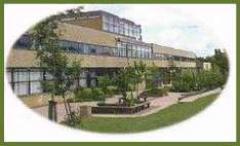
This is where it all happens....
|
My Action Research and the School! I
have been teaching at the school since September 1993 and the school
has always striven to be the best mixed comprehensive in Southampton.
This being predominantly based on performance in external examinations
though I know the school's strong positive ethos would also argue that
the school is keen to be the best in terms of contribution to school
life and wider community. So
how can I support this through my research? Well, quite easily I
believe! Through adapting the scheme of work on Tourism and trying hard
to deliver lessons that are both inspirational and challenging will
mean not only will the pupils understanding of Geography improve but
also their understanding of the wider issues relating the Tourism. And
what a fantastic time to be teaching about issues in Africa with the
Live8 concert on Saturday and the G8 Summit this week! I believe if
pupils are engaged and enthused it is more likely they will act on
their learning outside of lessons too and become well motivated
contributers to society as a result - all this on top of good
examination results, which can't be a bad thing!
|
|
|
My Hopes for the future.... I
am hoping that through completing this course and using the mentoring
skills I have developed that it can act as a 'springboard' to further
professional development for me. I am returning to full time teaching
next year and viewed this MA as a way for me to get myself back on the
career ladder. In the past I have been both Head of Year and a Head of
Geography and I am looking forward to taking on more respsonsibility in
the future. Maybe working more closely with the Special Needs
Department, maybe acting as the link teacher between school and the
university working on the student teacher programme. I did want to
progress into senior management at one time, I am not sure whether this
is what I want or not now? Maybe if one day the right job came up and
the wind was blowing in the right direction? Only time will tell! I do
however feel that this course has helped me to 'open my eyes' somewhat
to opportunities that may be out there and hopefully those
opportunities will be ones in which I can further develop my already
developing mentoring or action research skills.
|
|

A bit like Bob the Builder, working together to get the job done!
|
A collaborative partnership! We
have been asked to describe times when we have worked together
collaboratively with our research mentors. Rachele and I have often
worked together on an informal basis, sharing ideas and views and
offering suggestions on how to improve each other's work. However,
there have been a few notable occasions when we have worked together in
a more formal situation. The first being during one of the MA sessions
in the computer rooms when I was keen to share with Rachele the work my
Year 8 class had completed. The
pupils were asked to write a journal of a safari holiday to Kenya.
During the lesson the scene was set with the pupils arriving to Kenya
music playing. We discussed the music and where it came from, the
pupils were quick to assess it was from Kenya giving some fabulous
reasons as to why this was the case. They were then issued with photos
from Kenya and asked to write down words and phrases that best
described the images in the photographs, all of the time the music was
playing. The feedback from the group during the discussion was amazing
and made me feel really proud to be teaching them. Their responses were
so 'adult' and 'balanced' it was an uplifting experience. Thank
goodness, I had remembered to video this lesson!! After this initial
discussion I provided the pupils with an itinerary of a safari holiday
to Kenya. They were then asked to write a journal that was
geographically accurate describing the sights, sounds and experiences
of their holiday.This was completed for their homework. I
decided to discuss my plans for this lesson with Rachele as I knew it
touched on a topic close to her heart 'imagination' and I wanted her
opinion as to how I should go about it and how best to engage the
pupils in completing this work. She gave me some useful tips for which
I was grateful, the pupils put heart and soul into their work. I was
really impressed with the work the pupils had completed, the work was
well illustrated and colourful too. They all contained geographical
accuracy as well as fantastic imaginative accounts of their feelings on
seeing the sights and the animals, not to mention the injections and
mosquito bites! It was awe inspiring and I was really keen to share
this work with Rachele. She was impressed, it was obvious, and this
meant a lot to me as I value her opinion greatly and I was proud to
show her the pupils completed journals too. There will be examples of
pupil work linked to this snapshot in the future and even some video of
the class discussion that 'fired' the imagination of the pupils in the
group. Another
time when we have worked together has been today (12th July 2005) where
close to submission day, we decided to sit down together and have a
good read of each other's work and gauge whether we had completed all
of the tasks set. This was a really enlightening experience for me as
it allowed me to read in one go Rachele's work. It was a really
pleasurable and rewarding as it showed me how far she has come on since
the early days of our mentoring. Her work shows a real professionalism
and intellect. It made me feel really proud to be her mentor and
although there were some minor omissions and points on improvement to
be made, Rachele has really made my job of mentor an easy one as she
has clearly worked with dedication and commitment from the start. I
thank you for this Rachele. Rachele
did the same with my work and was very complementary about it which was
a superb feeling! Yes, there are things I still need to do, well
nobody's perfect! But it really helped having a fresh pair of eyes
looking over my submission and making some genuine and original
suggestions for improvement afterall we are all aiming at the same
target. So
how did Rachele and I set out to work like this? If I am honest I am
not sure? All I do know is that in school you can never be too sure of
when you are going to have free time. Often you think you will have
some time that day and then the cover goes up and all chances of having
a few minutes to yourself are snatched away! Anyone in teaching will
know what I mean by this! So up until recently, Rachele and I have just
caught each other as and when we have seen each other. This has been
sufficient on the whole to meet our needs, what with emails, text
messages and phone calls too! It has only been recently, we have felt
the need for a more formal setting as we wanted to really have some
uninterrupted time to work so for the first time we set a time and
place. It was then we both knew that this was 'our' time and it could
not be taken from us and we had to make the best of it. So how did we
decide on the next steps? Again this was done quite informally with
both of us looking at our course handbooks and the other person's
snapshot we had annotated. I went first and discussed my thoughts on
Rachele's snapshot and she then did the same with me. At the end of
this session we both knew what the other party thought our strengths
were and also knew where there was room for improvement. We came to our
respective targets quite easily as both of us trusted the other in
terms of what was good and what was not quite as good. That sounds a
bit better than 'bad!' Later
on we are hoping to have a go at the self evaluation forms together as
neither of us are particularly clued up on these either and we are
hoping that the old saying rings true - 'two heads are better than one!'
|
|

Book, books and yet more books!
|
Useful Resources and the PLTA! As
a new action researcher, I have been keen to discover what the term
actually means and how it is one actually goes about conducting a piece
of action research. But after reading about it, it soon became clear
that mentoring would have a large part to play in this as well, though
why I didn't pick up on this I am not sure, especially as the unit
title is 'Work Based Mentoring and Action Research.' So
there was my first challenge, to complete some reading and find out
exactly what these terms meant. Thankfully, Sarah Fletcher our course
lecturer, pointed us in the right direction by providing us with some
excellent resources that allowed us to investigate the terms further.
As part of our assessment for this unit, we have been asked to complete
a PLTA which is explained in the link below. By clicking on the link
you will be able to see what it is I have read, what I thought about it
and how I could use it in my own research and professional development.
Now
all I had to do was redefine my own definitions of action research and
mentoring in light of this reading and think about how to improve
teaching and learning through systematic enquiry - no mean feat!
The PLTA
Here you can find a completed PLTA, 'Professional Learning Task
Account' a writing scaffold issued by Bath Spa University College that
helps us engage with any literature we have used in this unit.
Bibliography, References and Websites!
Here you can find out about all the sources I have used in completing this snapshot.
|
|
|
|
My Musings on Mentoring Like
Action Research, very early on in this unit we had to write a
definition of what we thought mentoring is, this is what I came up with: Mentoring
is a two way process between two parties, the mentor and the mentee.
This partnership should be built on mutual respect and trust. The
mentor should provide a framework for open discussion and advice. The
framework should be flexible and meet the needs of the mentee
addressing ever changing issues, problems or successes as they occur.
(18/5/05) On
reflection, I have come to realise that my definition of mentoring does
not include several fundamental points. The most notable to me is that
mentoring is a two way learning process, Fletcher (2000); as I have
always assumed that the people mentoring me were the authority and had
completed all the learning they needed to do and not that the whole
mentoring processes was a learning tool for them too. Having read about
the importance of feedback, Parsloe and Wray (2000) I have been able to
appreciate that it is not the feedback as such per se but how it is
conducted and delivered. Mentoring also involves not only professional
development for both the mentor and the mentee but also offers a wealth
of opportunity for personal development as both parties will learn
about themselves through being part of a rigorous mentoring
relationship, Smith and West-Burnham (1993) I have been able to look at
different models on offer as a guide to particpiating in a mentoring
programme and have begun to realise that these models cannot be used in
isolation but used as a 'spring board' for futher advancements. Brookes
and Sikes (1997) They also argue the case for a stepped relationship in
mentoring that changes as the competencies of the mentee improves with
practise from one where the Apprenticeship model is dominant to one
where the mentor acts as co-enquirer that 'provides excellent
opportunities for professional devlopment for both parties.' I
also thought I had better look at what a 'professional mentor' thought
mentoring was and this bought me to our course reader, 'Mentoring in
Schools - A Handbook of Good Practice' by Sarah Fletcher to see what
she thought and was surprised to find in the introduction alone 23 word
or phrases associated with mentoring. No wonder I was finding
redefining it such a tough job! I
rather like the definition offered by Mullen and Lick (1999) as a
'synergised learning process' rather than a one way apprenticeship
where the mentor passes information to the mentee. This Apprenticeship
model of mentoring is probably the type of relationship I would have
favoured myself at the beginning of the course as I would have welcomed
Sarah teaching us rather than just guiding us through the process.
However, as the course has progressed I have come to appreciate her
input as a subtle and non persuasive influence on my research. Sarah is
very much someone who has asked probing and open questions but has left
me very much on my own to make up my mind and formalise my own ideas.
Her style is very much in line with Mullen and Lick's definition, where
the synergy comes from working collaboratively with someone on a
pathway of co-enquiry which hopefully leads to greater successes than
working independently. This I understand from Sarah, is what research
mentoring is all about and her defintion from her website would support
this as she suggests that research mentoring is 'creative collaboration
between teachers as researchers and other researchers' where the whole
is greater than the parts themselves. This idea is at the core of
Gestalt Philosophy and I can see its relevance here too. Now I feel
more confident in my own abilities as both and Action Researcher and as
a research mentor to Rachele, I feel empowered, energised and motivated
enought to tackle the further challenges offered by this MA course. To
me though the biggest revelation I have had, is that I believe, or at
least I feel I could argue the case, is that mentoring is Action
Research! If the mentoring relationship develops as it should based on
honesty, openness and trust, Fletcher (2000) then this will lead to
Action Research occuring. The mentor meets with their mentee and they
discuss an action point or plan, the mentee tries it out, it is
reviewed and evaluated and changed so that next time it is better and
so on and so forth. Mentoring like Action Research is a cycle and
although it might come to an end when the mentee or mentor moves on, it
is not long before those people are involved in new mentoring
relationships which brings new challenges but more experience and
begins all over again! This view is supported by Brokes and Sikes
(1997) when they write about the mentor as co-enquirer, where there is
an equal relationship between mentor and mentee and they work 'as an
equal in the process of enquiry in the knowledge that he or she may
also gain from this, an exercise close to action research.'
Mentoring spider diagram
This spider diagram was completed on 18/5/05 before I had the
opportunity to read much about mentoring, it might be a bit naive? Only
time will tell!
|
|
Take me by the hand and show me the way and once I'm there, please tell me!
|
How My Mentoring Relationships have developed... At
the beginning of the course, once we had all explained our Action
Research questions to the other members of the group we then had to
find a mentor. We were advised to work alongside someone whose piece of
Action Research was similar in some ways to our own. Based on this,
Sally Stevens and I decided to work together as both our questions were
looking at different learning styles and multiple intelligences. Before
starting the course, I did not really know Sally very well, I knew she
was a talented Drama teacher who was well regarded by both staff and
pupils but I knew very little else, but was looking forward to the
opportunity to work with someone new. Although I have touched base with
Sally on a few occasions, I feel my mentoring relationship with Rachele
Morse has really started to develop. I think this may be a bit of a
'ploy' on the part of Sarah Fletcher who swayed our choice of partner
in the first place only for us to see our mentoring relationships
develop in a totally different direction? I do feel guilty in some
respects as I feel I have not given the same opportunities to Sally as
I have been able to give to Rachele but on the other hand Rachele has
been able to offer me a lot of support, guidance and friendship too. So
what was it that sparked this relationship in the first place? Well it
was very much a throw away comment by the fridge in the staff room. I
don't know who enquired about the MA first, whether it was me, or
Rachele, but all I knew was that somehow something clicked and we were
engaging in a conversation about the MA course that felt real and
alive, it really was a two way exchange of two people on the same
footing trying to find the right route to take! What we managed to
squeeze into a few minutes was more relevant, honest and open than any
other conversation I had had about the MA course since starting it! I
think that Rachele must have felt the same, as the next time we spoke,
we just started from where we left off and the collaborative apsect of
our mentoring really started to form. This was just what I needed,
someone who was positive, even in the face of adversity, as neither of
us really knew what we were supposed to be doing at the point.
Beforehand most of the conversations I had been involved in with
colleagues were negative and unmotivating as they moaned about the
work, whereas with Rachele she was upbeat and seemed energised by the
whole prospect of the MA. This was exactly how I felt and so the
friendship / mentoring relationship blossomed as a result. Rachele
and I have regularly phoned and emailed one another with questions
about what we needed to do, how we had to do it and we have also rather
suprisingly to the both of us, have even discussed mentoring and action
research! I am not sure why this relationship has been able to flourish
whilst the one with Sally has not? Maybe it is because I have known
Rachele for longer? or maybe, it is because I think we are both quite
similar- she might agree to differ on this statement though!! As I see
it, we both have the same high expectations of ourselves and the pupils
we teach. I also know from recent conversations, we both hate missing
deadlines too. It would be interesting to see why Rachele thinks the
relationship has been so successful. Maybe I'll ask her! Our
meetings so far have been somewhat informal from snatched moments over
coffee in the staffroom to snatched moments at the bottom of the stairs
in the school's main foyer! As yet we have not actually timetabled an
actual meeting. At the moment these informal chats, phone calls and
emails have been sufficient to meet my needs. I assume they've met
Rachele's too? It may be that as the MA progresses we do find there is
a need to organise and plan more structured mentoring sessions with a
predetermined agenda? Who knows, only time will tell? Another
valuable relationship to me has been the suport and advice offered by
my husband Alan, who is a senior manager at a Hampshire School.
Although he is not actually studying for an MA at the moment he is on
the NPQH course and always has a viewpoint and sometimes even a 'pearl
of wisdom' to offer. I am also hoping, that he soon volunteers for the
position of proof reader too!
Rachele's Mentoring Qualities
I have been reflecting on what makes Rachele such a great research
mentor. This is a brainstorm of some of her best qualities - I am sure
there are many others, so check for updates later!
|
|

Helping each other!
|
Research Mentoring? When
I first started this course, I really could not see how mentoring
actually fitted into the equation? I grapsed the idea of action
research quite quickly and was really keen to get on with my project
and not give a second thought as to what mentoring was and how it could
be of use or benefit to me or the others on the course. So intially I
did not want to be a research mentor, I wanted an MA!!! So it was with
reluctance that I took on the role. Intially I had little idea as to
what the role of a research mentor was and viewed it as something that
required a lot of input from me and very little in return. Maybe this
is down to my own past experiences of being mentored and as a mentor
myself. Where often this is just a job you are expected to undertake
with very little time or resources to fall back on. It
has only been since I have begun working alongside Rachele that I have
begun to appreciate the rewards that a positive mentoring relationship
can have both personally and professionally. Through acting as a
research mentor to Rachele I have be able to appreciate the benefits of
being able to share and exchange ideas and views with someone whose
opinions I value and trust and as a result, I believe that both of us
developed our mentoring skills as a result. I know from talking to
Rachele that it was a role she was initially reluctant to adopt early
on too - so maybe it is just as well we found each other and have had
such a positive experience as a result! I think that is because we
started at the same point and we have ended up at the same point we
feel a certain empathy with each other. Our values have both changed
from being quite negative towards mentoring and the usefulness of it to
our research to one where we both are able to value the relationship
greatly. Although we are research mentors and mentees, it does not feel
like either of us are really in either role. We don't sit down and one
minute Rachele is the mentor and me the mentee then swap, it much more
a fluid relationship where the role changes automatically without much
thought going into it. I would describe our relationship as one of
mutual support, respect and trust as there is no one time where I have
felt either superior or inferior to Rachele! Acting
as a research mentor has allowed me to work in a professional capacity
alongside a dedicated and talented teacher who has very similar values
to me - maybe this is why the partnership has been so successful, it
has also taught me a lot about myself too. It has taught me to be less
selfish and to support other people more than I would have done in the
past, where I would have been content to just get on with it in
isolation. Working colllaboratively has meant that my motivation and
commitment to this unit has increased and spurred me on to work harder
than I think I would have done if I had been left to my own devices!
Rachele has always been willing to share her work with me and I have
always done the same and as a result I believe that our snapshots look
and read really well. Rachele has passed comments on mine and I have
done so on hers. Without Rachele's praise, sound judgement and honesty,
I don't think I would have attacked this unit with such vigour! I
really want to share new additions with her to see what she thinks and
she always keeps me regularly updated with hers. This has really
challenged my original ideas on mentoring where I have always been on
the receiving end and always delivered as a result, something closely
resembling the Apprenticeship Model; to being in the position of really
valuing the opportunity to work alongside a fellow professional with
whom I feel I am on an equal footing with to achieve common goals. This
relationship has really developed into one of 'mentor as co-enquirer'
Brookes and Sikes (1997) and I have been able to develop my mentoring
skills not only on a professional basis but also on a personal level
too. This was something I could have never envisaged before I started
on this course. I
don't profess to be the perfect mentor, I know there are areas I need
to improve on. My biggest concern is that when Rachele is explaining
something to me, I sometimes don't let her finish and am so keen to
voice my opinion that I end up cutting across her and ruining her train
of thought. I noticed this quite early on and have promised myself, in
future, I will let Rachele have her say and once she has had it only
then will I speak! Tough job for someone like me I know. At the moment,
I don't think I am being fair to her and providing her with the
opportunity to get things off her chest, but I will try harder with
this aspect in the future.
|
|
|
Examples of student work This is where I am hoping to include some work completed by the pupils in my Year 8 group.
|
|
|